Truck brake safety deserves attention long after an inspection campaign ends. A problem discovered in the yard is easier to address than one that appears when traffic stops or a loaded truck starts down a steep grade. Drivers need to recognize warning signs, report them clearly, and understand where routine checks end and qualified brake service begins.
The Commercial Vehicle Safety Alliance highlighted this issue during Brake Safety Week, August 23–29, 2026, with special attention to brake drums and rotors. That campaign is over, but its focus offers a useful starting point for reviewing everyday inspection and maintenance habits.
Why Truck Brake Safety Remains a Priority in 2026
CVSA’s separate 2026 unannounced Brake Safety Day results recorded 574 commercial vehicles with brake-related out-of-service violations among 4,021 inspections, or 14.3%. Those figures describe vehicles inspected during that event, not every truck on the road, and should not be confused with the August campaign’s results.
The practical takeaway is to treat brake checks as a continuing responsibility rather than preparation for a particular enforcement week. For the broader walk-around routine, read our guide to pre-trip truck inspections and what to check before driving.
Understand Drum and Rotor Wear
Drum brakes slow a vehicle by pressing brake shoes and linings against the drum’s inner surface. Disc brakes use pads that clamp a rotor. Both arrangements rely on friction, and their working surfaces must remain within the applicable wear limits.
Use the Correct Manufacturer Limits
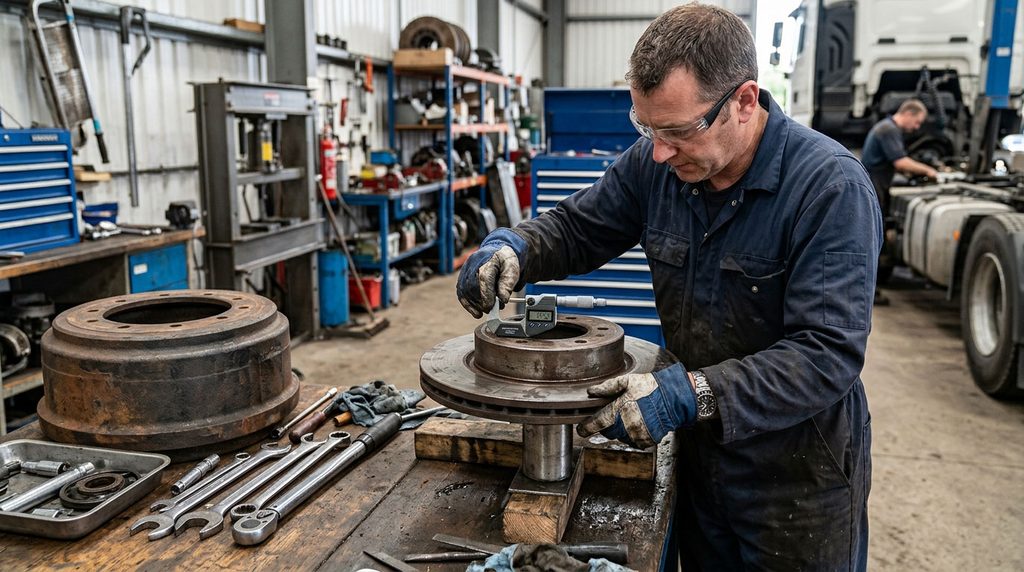
There is no single drum or rotor thickness number that applies to every truck. Under 49 CFR 393.47(g), drum and rotor thickness must meet the limits established by the component manufacturer. Brake lining and pad requirements also differ by brake type and axle position.
Report visible cracks, broken areas, or suspected contamination rather than deciding that a component is acceptable because the truck still stops. A walk-around cannot confirm the condition of surfaces hidden behind wheels or inside assemblies.
Leave Detailed Measurements to Qualified Personnel
Drivers should not remove wheels or dismantle brake assemblies unless trained and authorized for that work. FMCSA’s brake inspection guidance explains the qualifications required of personnel assigned brake inspection and maintenance responsibilities.
Build a Repeatable Pre-Departure Brake Check
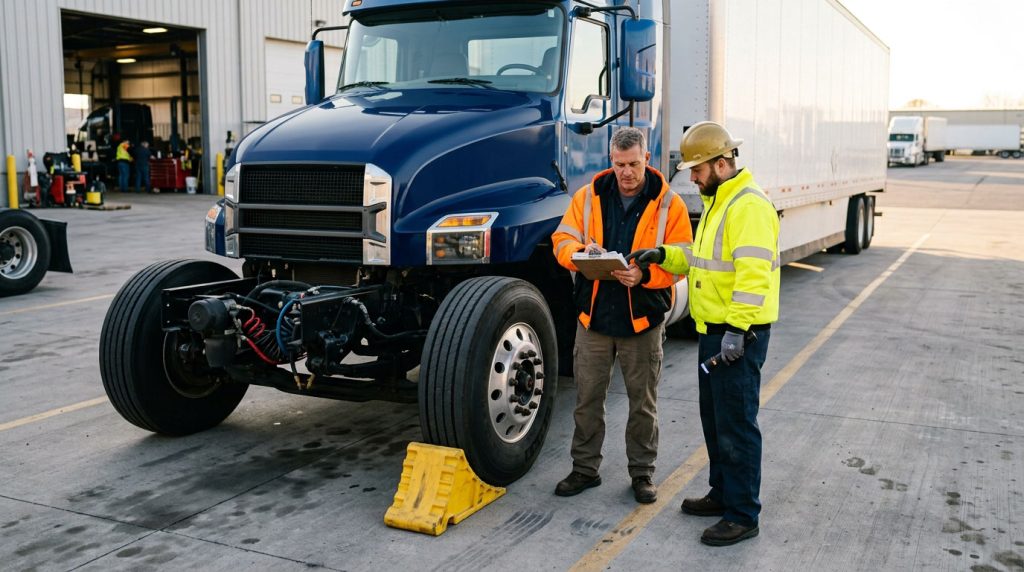
Start in a safe, level location away from moving traffic. Secure the vehicle and use the precautions required for each test, including wheel chocks when appropriate. Do not crawl underneath an unsecured vehicle or improvise a brake-test procedure.
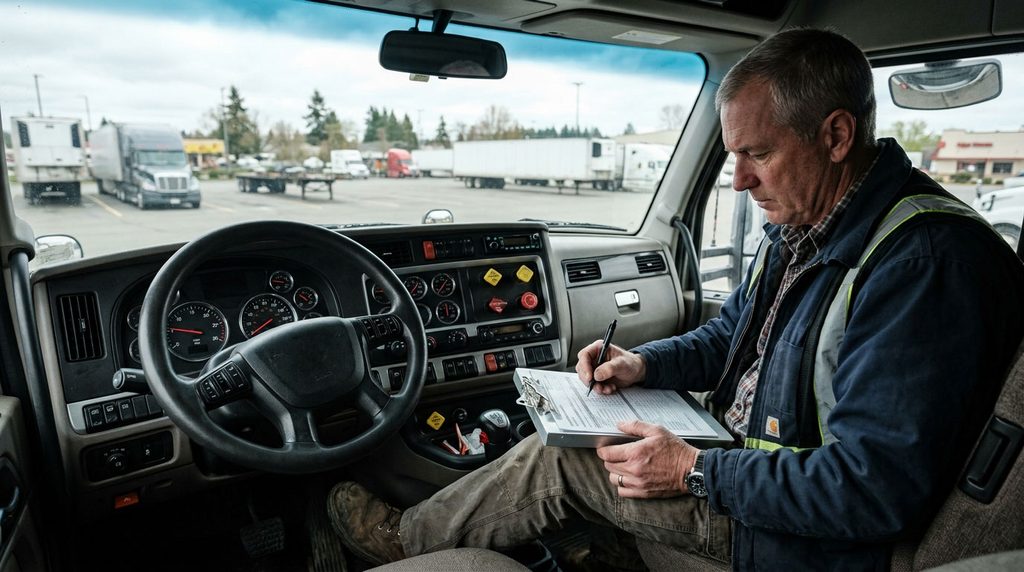
Before driving, 49 CFR 396.13 requires the driver to be satisfied that the vehicle is safe to operate and to review the last required inspection report. Review any applicable repair certification rather than assuming a previously reported problem was resolved.
Look at Accessible Hoses and Connections
Inspect accessible air lines for rubbing, cuts, kinks, heat damage, and insecure routing. Listen for unexpected air leakage and report concerns. FMCSA’s brake-system guidance explains that hoses must be protected against chafing, mechanical damage, and high-temperature sources.
Check the trailer connections as well as the tractor. A recently exchanged trailer needs its own inspection; familiarity with the tractor does not establish the condition of the combination.
Check Gauges and Warning Indicators
Follow the vehicle manufacturer’s instructions and your commercial driver training for air-pressure buildup, leakage testing, and brake-function checks. Use the correct procedure for the equipment rather than a remembered number from a different vehicle.
Watch the antilock braking system’s warning indicators through their specified self-check sequence. CVSA’s brake-system FAQs explain why an ABS lamp that fails to illuminate or remains on can indicate a compliance problem. Have abnormal behavior investigated rather than treating a dashboard reset as a repair.
Recognize changes during the prescribed low-speed service-brake check. Pulling to one side, an unusual response, or delayed stopping should be reported. Follow the approved test method in a clear area; a highway run is not an appropriate diagnostic experiment.
Recognize a Low-Air Warning
A low-air warning while driving requires a prompt, controlled stop in a safe location. Do not wait for spring brakes to apply automatically. The Oregon Commercial Driver Manual’s air-brake section explains this response and the need to have the system repaired.
What to Do When You Find a Brake Defect
Do not begin a trip with an unresolved defect that makes the truck unsafe. If a problem develops on the road, prioritize reaching a safe stopping position, securing the vehicle, and contacting dispatch or maintenance. Arrange assistance rather than continuing merely to meet a delivery appointment.
Make your report specific. Identify the tractor or trailer, the affected side or axle when known, the warning displayed, and the circumstances in which it appeared. Record observations rather than guessing the failed part. For example, “audible air leak near the trailer connection” gives maintenance a clearer starting point than “brakes bad.”
Understand Reporting and Repair Responsibilities
For operations covered by 49 CFR 396.11, drivers must report defects that could affect safe operation or cause a mechanical breakdown. Property-carrying drivers generally do not need a federal no-defect report when no defect is found or reported, although company policies may require one.
The rule also requires correction of defects likely to affect safe operation before the vehicle is used again, together with the applicable repair certification. An inspector-issued out-of-service restriction is not permission to drive to the next delivery; the identified out-of-service violations must be corrected before operation resumes.
Make Brake Safety Part of Every Dispatch Decision
Build time for inspection and repair follow-up into the workday. A useful maintenance routine connects the driver’s report to an assigned review, the repair decision, and confirmation before release. Repeated complaints about the same unit deserve investigation, not another unchecked box.
A practical fleet habit is to assign each reported concern to a named person for follow-up. Keep the tractor or trailer identification with the report, and tell the next driver what was found and what action was taken. This helps prevent a defect from being lost during a shift change or trailer exchange.
Keep learning through our Vehicle Inspections articles. The goal of truck brake safety is not simply passing a roadside check. It is ensuring that the equipment is fit for the next trip and that concerns are addressed before the truck returns to traffic.
This article provides general safety information, not a complete inspection procedure or repair manual. Follow applicable regulations, manufacturer instructions, employer procedures, and qualified training. Read safety resources only while safely parked.