

Pre-trip truck inspections give drivers a chance to identify equipment problems before entering traffic. A leaking air line, damaged tire, or insecure trailer connection deserves attention in the yard, not after the truck reaches highway speed. The goal is to establish whether the entire combination is ready to operate safely.
This guide from Truck Driving Safety covers common checks for commercial trucks operating under applicable U.S. federal requirements. Use it alongside your training, carrier procedures, and vehicle manufacturer’s instructions, not as a substitute for them.
Why Pre-Trip Inspections Are in Focus in 2026
The Commercial Vehicle Safety Alliance released its 2026 International Roadcheck results on August 25, following inspections held May 12–14. Across North America, inspectors recorded 3,379 brake-system, 2,914 tire, and 1,724 cargo-securement out-of-service violations.
These are violation counts from an enforcement event, not estimates of how many trucks nationwide are unsafe. Nevertheless, they make brakes, tires, and cargo particularly timely inspection topics. A focused checklist should give these components attention without overlooking the rest of the vehicle.
Start With Records and a Safe Inspection Area
Under 49 CFR 396.13, drivers must be satisfied that the vehicle is safe before driving. Review the previous driver vehicle inspection report when required and acknowledge the repair certification as applicable. Do not assume yesterday’s inspection proves today’s condition.
Choose a stable, level area away from moving traffic. Secure the truck against movement using the parking brakes and wheel chocks as your inspection procedure requires. The Georgia DDS vehicle inspection guide recommends following a consistent inspection sequence. Keep a flashlight and appropriate gauges available.
Your Pre-Trip Truck Inspection Checklist
Tires, Wheels, and Rims
Inspect every tire, including inside dual tires and trailer tires. Look for exposed cords, separation, cuts, bulges, and air leaks. Use a pressure gauge rather than relying on appearance or kicking the sidewall. Confirm cold inflation pressure is appropriate for the load and tire specifications.
Know the Minimum Tread Depths
Federal tire requirements specify at least 4/32 inch on front tires of trucks and truck tractors, and 2/32 inch on other tires, measured in major tread grooves, excluding raised features such as tie bars. These are minimums, not assurances that a tire is otherwise safe.
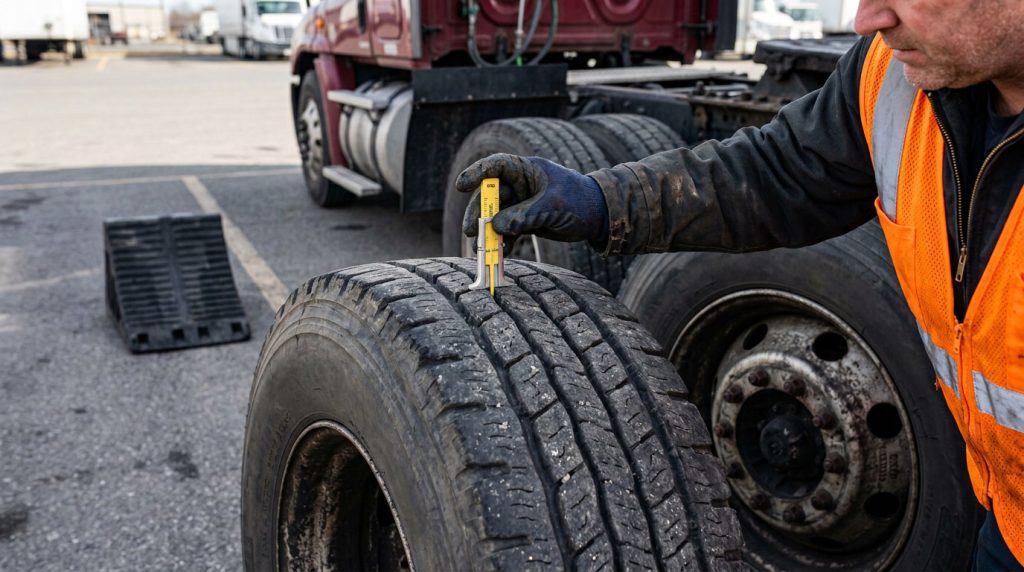
Check rims for damage, wheel fasteners for missing or loose hardware, and hubs for leaks. Report suspicious rust trails around fasteners for evaluation rather than assuming the wheel is secure.
Brakes and Air Lines
Inspect accessible brake components on the tractor and trailer. Look for damaged hoses, unsecured connections, obvious leaks, and visible damage or contamination around braking components. The Georgia DDS external inspection guidance also covers brake chambers, drums, linings, and related hardware.
Do not crawl beneath an unsecured vehicle or attempt brake adjustments without the necessary qualifications. A visual check does not replace the required functional checks.
Complete Vehicle-Specific Brake Tests
Follow your training and the manufacturer’s procedure for service-brake, parking-brake, and air-system checks. Air-brake checks include pressure buildup, leakage, low-pressure warnings, and protective devices. Secure the vehicle correctly before any test requiring brake release. Uncertain results require qualified evaluation before departure.
Engine Compartment, Steering, and Suspension
Following the manufacturer’s safe-access procedure, check relevant fluid levels, hoses, belts, wiring, and visible leaks. Keep clear of moving components and never open a hot, pressurized cooling system.
Look for damaged or loose steering components and visible suspension problems, including broken springs or damaged air bags. Note unusual vehicle lean. Close and secure the hood before moving on; a fluid refill alone does not explain why the level dropped.
Lights, Mirrors, and Cab Equipment
Check headlights, brake lights, turn signals, hazards, clearance lights, and trailer lighting. Clean reflectors and reflective tape. Inspect the windshield, adjust mirrors, and check wipers, washers, the horn, and seat belt.
Use the Georgia DDS internal inspection guide to review cab controls and warning indicators. A persistent warning deserves investigation, not dismissal. Secure loose items so they cannot obstruct pedals.
Check that the correctly rated fire extinguisher is charged, accessible, and secured. Verify required warning devices, such as three compliant reflective triangles, under federal emergency-equipment requirements.
Fifth Wheel and Trailer Connections
For tractor-trailers, verify the fifth-wheel locking mechanism, kingpin engagement, mounting hardware, and applicable slider locks. Confirm the trailer apron rests correctly on the fifth wheel without a gap. Use your trained coupling-verification procedure rather than relying on one indicator.
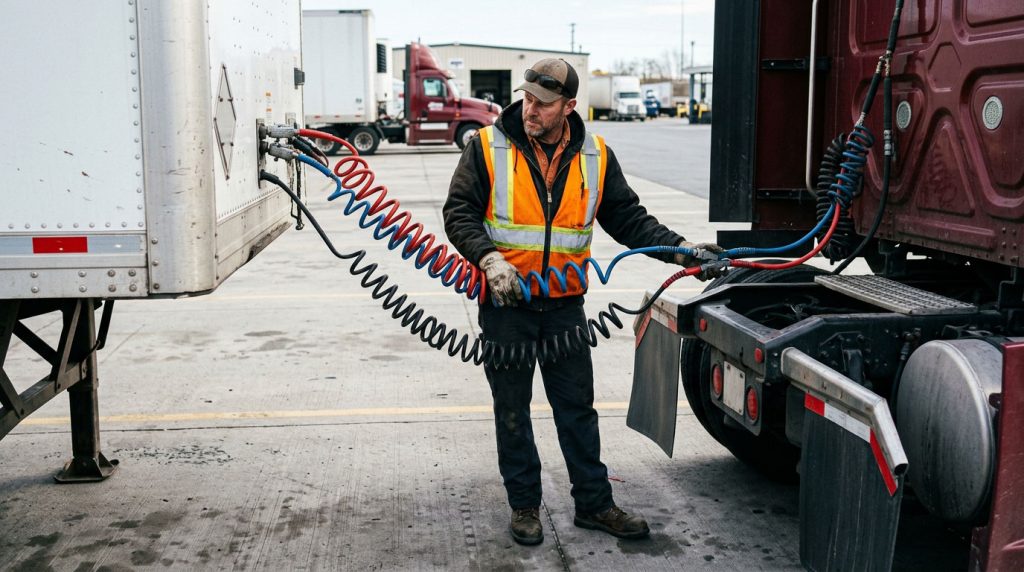
Check that air and electrical connections are secured and lines are not pinched, rubbing, or dragging. Ensure landing gear is raised and secured for travel.
Cargo and Exterior Security
Confirm that accessible cargo is properly distributed and restrained with suitable securement equipment. Check straps, chains, anchor points, and other devices for damage. Doors, tarps, and exterior equipment must also be secured.
49 CFR 392.9 addresses cargo security before departure and during transportation. Its driver inspection provisions include exceptions for sealed vehicles drivers are ordered not to open and loads that make inspection impracticable. Do not break a seal without authorization.
Document Defects and Resolve Safety Problems
Describe problems precisely: identify the tractor or trailer, component location, and what you observed. Photos can support a report but should not replace a clear description. Notify maintenance or the responsible carrier representative.
Under federal driver vehicle inspection report requirements, carriers must correct defects likely to affect safe operation and certify repairs or that repair is unnecessary before operation. For property-carrying operations, the federal rule generally does not require a no-defect DVIR when nothing is discovered or reported. That exception does not remove the pre-drive safety check. Carrier procedures may require additional documentation.
A completed form does not make an unsafe truck safe. Do not begin the trip with unresolved safety defects.
How Long Should the Inspection Take?
Section 396.13 does not set a universal 15-minute inspection duration. Allow enough time to check your particular equipment and investigate anything unusual. A familiar tractor, a newly assigned trailer, and a combination returning from repairs may need different levels of attention.
Do not rush to match a timer. Follow your carrier’s process, and record inspection activity accurately rather than entering time that does not reflect the work performed.
Keep Checking After Departure
Where the cargo-inspection requirements apply, inspect cargo and securement within the first 50 miles. Recheck after a duty-status change or after three hours of driving or 150 miles, whichever occurs first, subject to the exceptions noted above.
A trailer change also calls for checking the replacement trailer and its connections before driving.
Continue watching gauges and responding to unusual sounds, handling changes, or warnings. The FMCSA’s truck-driver safety guidance emphasizes completing pre-trip inspections, particularly tire and brake checks, before driving.
For more educational resources, browse our truck driving safety articles while safely parked. Safer miles start with knowledge — and with acting on the problems an inspection reveals.